
What Are Engraving Plastic Sheets Made Of?

2022-07-23 - Leave me a message

Engraving Plastic Material Guide

What Are Engraving Plastic Sheets Made Of?

Engraving plastic sheets are not all made from the same substrate or produced with the same surface process. The substrate, permanent color layer and manufacturing method determine whether a sheet is suitable for CNC, rotary or laser engraving.

Direct answer: LYSHIRE commonly uses an ABS substrate for CNC and rotary engraving sheets and a PMMA/acrylic substrate for laser engraving sheets. The visible surface color is provided by a thin permanent laminated film rather than traditional screen-printed ink.

Material Structure

How Is a Two-Ply Engraving Sheet Constructed?

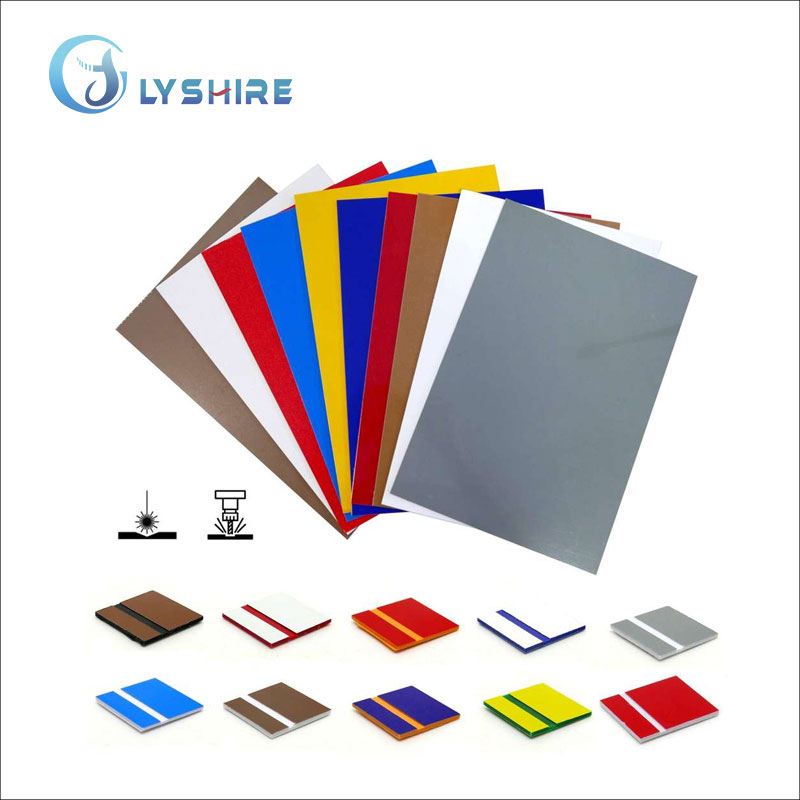
A typical two-ply engraving sheet contains a thin permanent surface color layer and a thicker plastic substrate in a contrasting color.

During engraving, the machine removes the thin surface layer and exposes the contrasting substrate underneath. For example, engraving a black surface with a white core reveals white text or graphics. The color contrast comes from the material structure itself; it is not UV printing applied after engraving.

The permanent engraving film should not be confused with the removable transparent PET protective film. The permanent color film forms part of the sheet, while the outer PET protective film protects the surface during handling, transportation and processing.

ABS Base for CNC and Rotary

LYSHIRE’s regular CNC and rotary engraving sheets use ABS as the primary substrate with a thin permanent color film applied to the surface.

These materials are used for equipment labels, electrical markers, control-panel labels, nameplates, warning signs and industrial identification.

PMMA/Acrylic Base for Laser

LYSHIRE’s regular laser engraving sheets use PMMA, also known as acrylic, as the primary substrate with a contrasting permanent surface color layer.

The acrylic-based structure is designed for fine laser text, symbols, serial information and other high-contrast graphics.

Select the Material According to the Processing Method

A sheet developed for CNC or rotary engraving should not automatically be treated as a laser-compatible material. Buyers should identify the intended machine and processing method before confirming the substrate, thickness and product series.

See the LYSHIRE process system and laser engraving sheet range for relevant material options.

Surface Manufacturing

Film-Laminated Surface vs Traditional Screen-Printed Ink

Two different surface-production methods are found in the engraving plastic market. Although their finished products may appear similar in ordinary photographs, magnified inspection shows clear differences in surface uniformity and cleanliness.

Traditional Screen-Printed Ink Surface

In the traditional process, colored ink is screen-printed directly onto an ABS substrate. The printed sheet must then be dried naturally or through a controlled drying process.

This method remains in use in the engraving plastic industry. Its finished appearance may depend heavily on manual ink formulation, operator experience, drying conditions and environmental cleanliness.

  • Manual ink mixing may produce batch-to-batch color differences.
  • A change in the operator or mixing method may affect the final shade.
  • Dust or airborne particles may settle on the ink before it is completely dry.
  • Particles trapped beneath a high-tack protective film may detach when the film is removed.
  • Detached particles can leave visible pinholes, dark marks or surface imperfections.

LYSHIRE Film-Laminated Surface

LYSHIRE does not use the traditional screen-printed surface-ink process for its standard engraving sheets. Instead, a controlled thin color film is laminated onto the plastic substrate.

The film-laminated structure avoids leaving wet surface ink exposed during a drying period. It provides a cleaner surface, a more controlled engraving layer and greater consistency than a surface color that must be manually mixed for each production batch.

  • Cleaner surface: no exposed wet screen-printed ink drying stage.
  • Improved color consistency: standardized film color reduces reliance on manual ink mixing.
  • More refined appearance: the surface is less affected by dust during ink drying.
  • Controlled engraving layer: the thin permanent film provides a consistent layer for exposing the contrasting core.
  • RoHS compliance: LYSHIRE engraving plastic sheets have passed RoHS compliance testing.

The following magnified comparison shows the real surface structure of the two manufacturing methods.

Magnified comparison of LYSHIRE film-laminated engraving sheet surface and traditional screen-printed ink surface

Magnified surface comparison: LYSHIRE’s film-laminated engraving sheet is shown on the left, while a traditional screen-printed ink surface is shown on the right. The image demonstrates differences in surface uniformity, cleanliness and visible particles.

LYSHIRE engraving plastic sheets have passed RoHS compliance testing. Anti-UV testing is also available for ultraviolet-resistance and outdoor-performance evaluation. RoHS relates to restricted hazardous substances, while anti-UV testing relates to ultraviolet resistance and durability; they are different types of supporting documentation.

Process Comparison

Differences Between the Two Surface Methods

Comparison Screen-Printed Ink Surface LYSHIRE Film-Laminated Surface
Surface color method Ink printed onto the plastic substrate Controlled permanent color film laminated onto the substrate
Drying requirement Requires ink drying or curing No exposed screen-printed surface ink drying stage
Color control May depend on manual ink formulation and operator experience Standardized film color and controlled production references
Surface cleanliness Sensitive to dust during printing and drying Cleaner and more uniform surface finish
Compliance support Depends on the ink, substrate and supplier documentation LYSHIRE sheets have RoHS compliance documentation

Decorative Surfaces

Are Brushed, Mirror and Pearlescent Sheets Film-Based?

Yes. LYSHIRE’s brushed metallic, mirror, pearlescent and other decorative engraving sheets also use a thin specialized decorative surface film combined with the selected plastic substrate.

These finishes should not be described simply as metallic paint. Their appearance is created by the surface film and its visual texture. Because brushed, mirror and pearlescent finishes reflect light differently from regular matte colors, buyers should evaluate physical samples before confirming a large order.

Custom Structures

Other Available Engraving Sheet Structures

In addition to regular film-laminated two-ply sheets, LYSHIRE can develop different structures according to the customer’s processing and application requirements.

  • Single-color sheet: a solid-color plastic sheet without a contrasting engraving layer.
  • Two-ply sheet: one permanent surface color layer combined with a contrasting plastic substrate.
  • Three-ply sheet: a multilayer structure designed to reveal different colors at controlled engraving depths.
  • Double-sided engravable sheet: thin engraving films applied to both sides of a plastic core.
  • Co-extruded structure: a plastic surface layer combined with a plastic substrate instead of the standard thin film surface.
  • Custom decorative surface: brushed, mirror, glossy, matte, pearlescent or other specified finishes.

More information is available through the LYSHIRE engraving plastic structure system and custom applications.

Material Selection

How Should Buyers Select the Right Material?

Processing Requirement Recommended Substrate Important Checks
CNC or rotary engraving ABS-based engraving sheet Tool compatibility, engraving depth, thickness and surface adhesion
Laser engraving PMMA/acrylic-based laser engraving sheet Laser compatibility, contrast, power and speed settings
Outdoor identification Material selected according to exposure requirements Anti-UV performance, color, adhesive and installation conditions
Custom appearance or structure Film-laminated, co-extruded or custom layered material Physical sample approval and processing test

Before ordering, buyers should provide the intended engraving method, surface and core colors, thickness, sheet size, surface finish, application environment and estimated quantity. A physical sample test is the most reliable way to confirm whether the selected structure matches the customer’s machine and application.

B2B Material Support

Need Help Selecting an Engraving Plastic Structure?

Tell LYSHIRE whether you use laser, CNC or rotary engraving, together with your required colors, thickness, sheet size, surface finish and application. Our team will recommend the appropriate ABS, acrylic or customized layered structure and arrange samples for evaluation.

Contact LYSHIRE

Buyer Questions

Frequently Asked Questions

Are all double color sheets made from ABS?

No. LYSHIRE commonly uses ABS for CNC and rotary engraving sheets, while regular laser engraving sheets use a PMMA/acrylic substrate. The correct material depends on the processing method and application.

Is the surface color printed with ink?

LYSHIRE’s standard engraving sheets use a thin permanent color film laminated onto the plastic substrate rather than the traditional screen-printed surface-ink method.

Is the permanent color film the same as the removable protective film?

No. The permanent color film forms part of the engraving material. The transparent PET protective film is a removable outer layer used during handling, transportation and processing.

Why can screen-printed sheets have surface pinholes?

If dust particles settle on wet ink before it is fully dry, they may become trapped beneath the protective film. Removing a high-tack protective film may pull away these particles and leave small marks or pinholes in the printed surface.

Have LYSHIRE engraving sheets passed environmental testing?

LYSHIRE engraving plastic sheets have passed RoHS compliance testing. Anti-UV testing is also available for ultraviolet-resistance and outdoor-performance evaluation.

Can LYSHIRE customize the material structure?

Yes. Available options include single-color, two-ply, three-ply, double-sided engravable, co-extruded and custom decorative surface structures. Custom projects require specification review and sample confirmation.

Send Inquiry

X
We use cookies to offer you a better browsing experience, analyze site traffic and personalize content. By using this site, you agree to our use of cookies. Privacy Policy