
ABS vs Acrylic Engraving Sheets: Which Is Better for Rotary or Laser Engraving?
Direct answer ABS-based engraving sheets are normally the practical choice for rotary and CNC engraving, while PMMA/acrylic-based engraving sheets are normally the preferred choice for CO2 laser engraving. The better material depends on the processing method, required edge quality, finished application and environmental conditions—not on one material being universally better than the other.
ABS and acrylic are both used as base materials for two-ply engraving sheets, but the two materials behave differently during processing. Selecting the wrong structure can cause unnecessary cleaning, poor edge definition, unstable engraving depth or inefficient production settings.
For B2B buyers, the first purchasing question should therefore be: Will the sheet be engraved with a rotary/CNC cutter or with a CO2 laser? Once the processing method is clear, thickness, color combination, surface finish, adhesive and application requirements can be confirmed.
ABS vs Acrylic Engraving Sheets at a Glance
ABS-Based Engraving Sheet
Normally selected for rotary and CNC engraving because the ABS base provides practical mechanical cutting behavior and can be fabricated into industrial labels, nameplates and custom shapes.
PMMA/Acrylic-Based Engraving Sheet
Normally selected for CO2 laser engraving because a purpose-made acrylic structure supports clean laser processing, detailed graphics and efficient non-contact production.
| Comparison point | ABS engraving sheet | PMMA/acrylic engraving sheet |
|---|---|---|
| Typical LYSHIRE process | Rotary engraving and CNC machining | CO2 laser engraving and laser cutting |
| Processing contact | Physical cutter removes the face layer and machines the base | Focused laser removes the face layer without a mechanical cutter |
| Primary approval checks | Chip formation, burr control, cutter path and engraving depth | Power, speed, focus, heat effect and engraving contrast |
| Typical applications | Industrial labels, equipment plates, control panels and routed signs | Laser-engraved labels, detailed signs, nameplates and identification graphics |
| Selection priority | Mechanical machinability and controlled cutter results | Predictable laser response and clean non-contact processing |
Why Base Material Selection Matters
The face layer creates the visible color, while the base material determines much of the sheet's processing behavior. Two sheets can have a similar black-and-white appearance but require different machine settings because one sheet uses an ABS base and the other uses a PMMA/acrylic base.
LYSHIRE manufactures engraving sheets according to the intended process rather than treating every two-ply sheet as interchangeable. The engraving sheet structure system provides additional information about face layers, core colors and custom constructions.
When to Choose an ABS Engraving Sheet
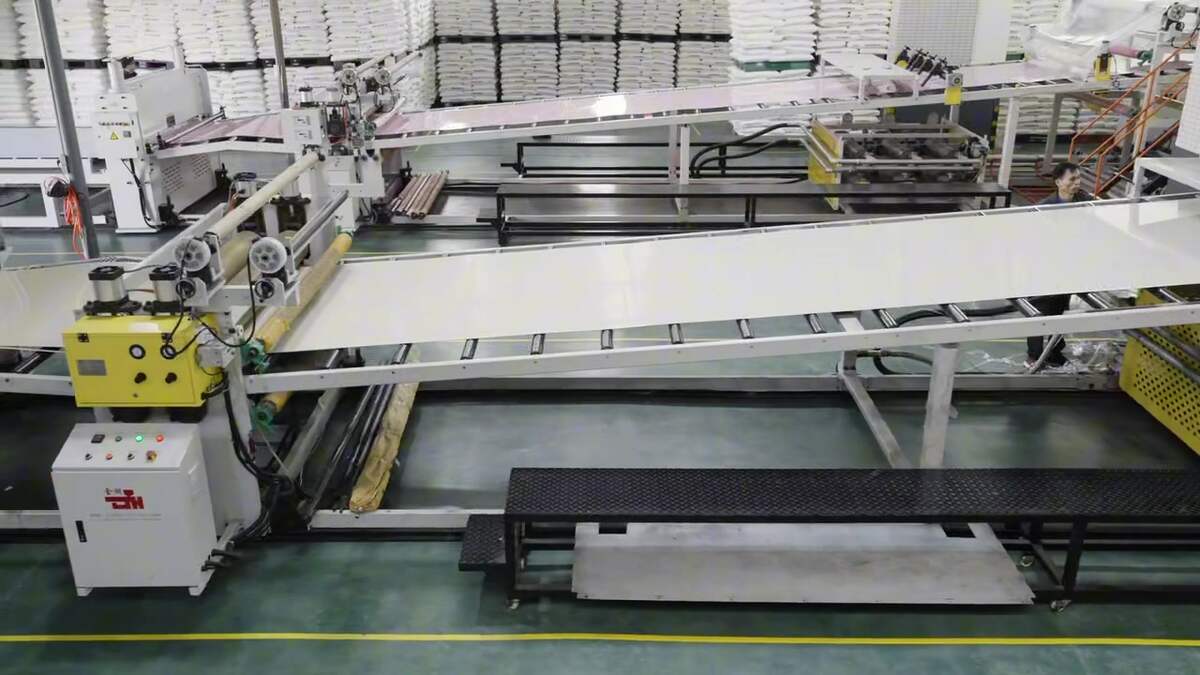
An ABS-based engraving sheet is normally appropriate when a rotary engraver or CNC router physically removes the surface and cuts the required shape. The material is commonly selected for industrial identification work that may require engraving, routing, drilling, corner rounding or custom fabrication.
ABS engraving sheets are commonly suitable for:
- Equipment labels and machine identification plates
- Electrical labels and control-panel legends
- Safety signs and warning signs
- Valve tags, asset tags and serial-number plates
- Custom-cut nameplates and routed components
Rotary and CNC results depend on cutter geometry, cutter condition, spindle speed, feed rate and engraving depth. A suitable ABS engraving sheet should machine cleanly and expose a uniform contrasting core without requiring excessive depth.
LYSHIRE recommendation: Do not assume that a standard ABS rotary/CNC sheet is the best option for CO2 laser processing. If the customer's main equipment is a laser, a purpose-made acrylic laser engraving sheet should be evaluated first.
When to Choose a PMMA/Acrylic Laser Engraving Sheet
A PMMA/acrylic-based engraving sheet is normally selected for CO2 laser engraving and cutting. Laser processing is non-contact, which makes the material suitable for detailed graphics, repeated small labels and variable identification content when the correct material and machine settings are used.
Laser quality depends on power, speed, focus, resolution, air-assist strategy and extraction. The laser should remove the thin face layer cleanly and reveal the core without excessive heat marks or melted edges.
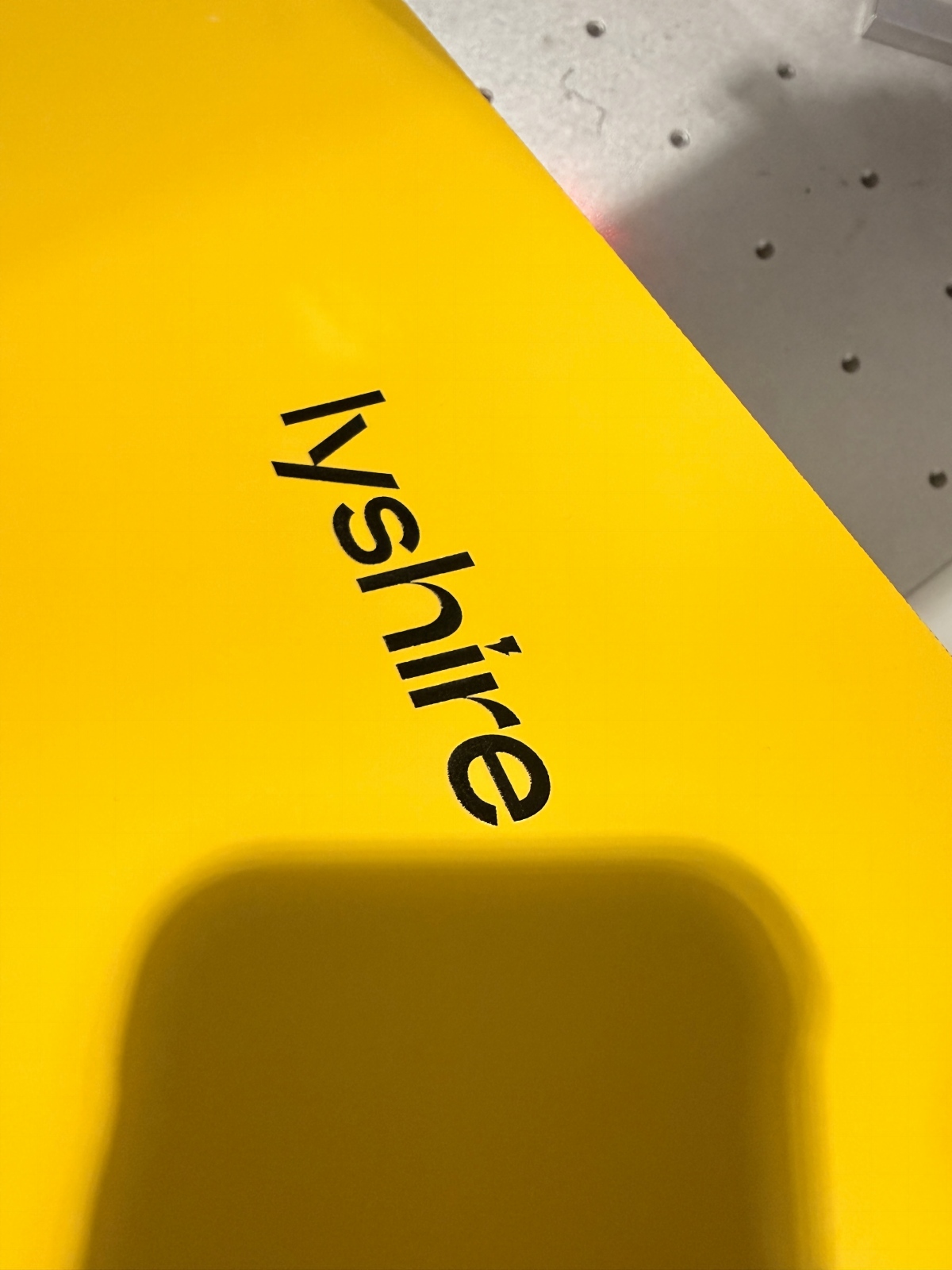
Buyers using CO2 laser equipment can review the LYSHIRE laser engraving sheet range and provide the machine type, thickness and intended application when requesting samples.
The Surface Layer Is Also Part of the Decision
Base material is only one part of the sheet structure. Surface construction affects color cleanliness, engraving contrast, finish consistency and batch repeatability. LYSHIRE standard engraving sheets use a controlled film-laminated face rather than relying on manually mixed screen-printing ink as the finished color surface.
Matte, gloss, brushed, mirror, pearlescent and other decorative finishes can be produced for suitable structures. The buyer should confirm whether the finish is intended for laser or rotary/CNC processing because similar-looking surfaces can use different base constructions.
Thickness and Format Should Match the Application
Material choice does not end with ABS or acrylic. Thickness affects rigidity, engraving depth, cutting settings, installation and shipping weight. LYSHIRE can supply multiple thicknesses, while 1.3 mm and 1.5 mm are common choices for many identification and signage applications.
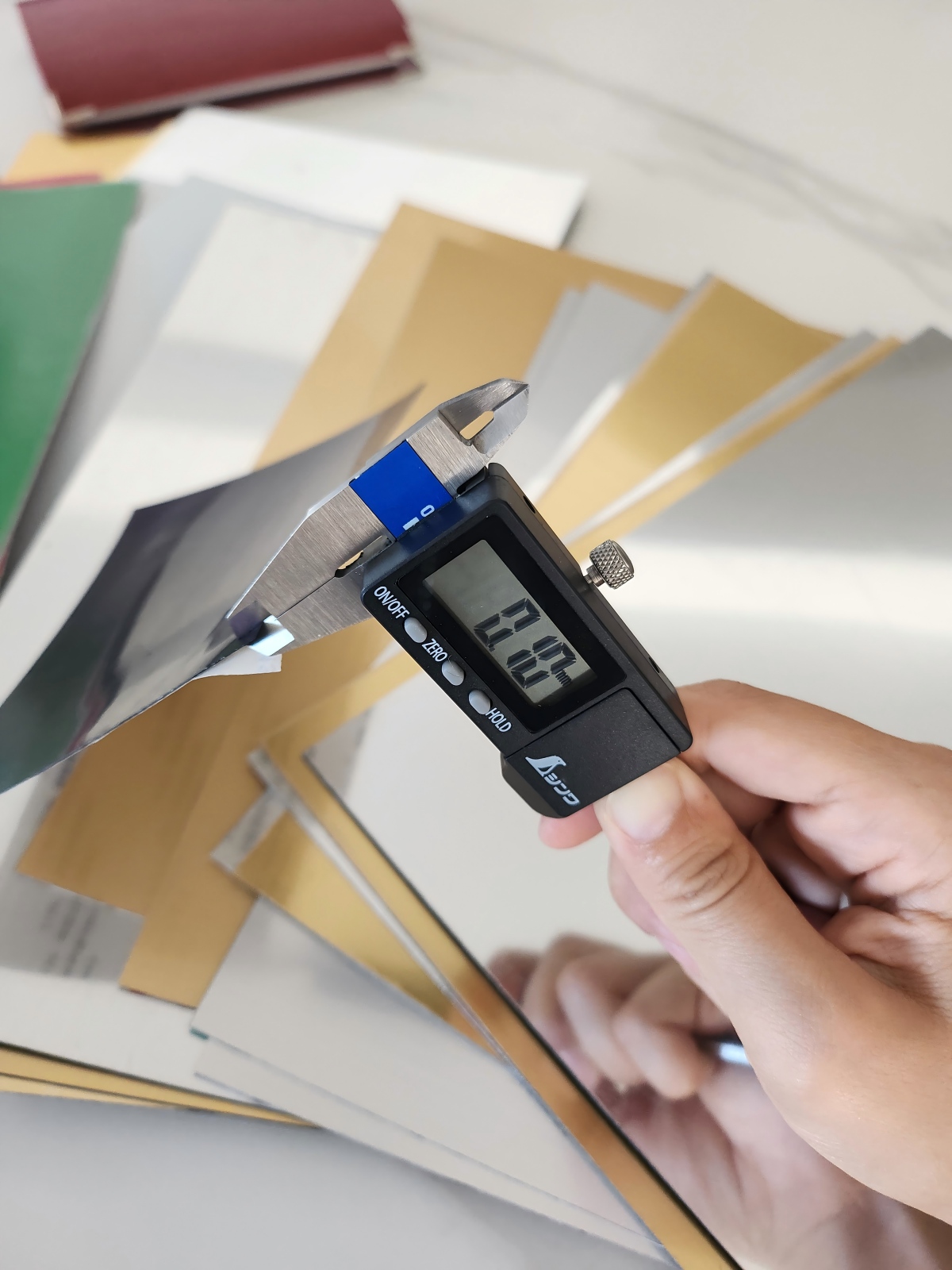
Sheet size, cut-to-size requirements, holes, rounded corners, special shapes and adhesive backing should also be confirmed before quotation. LYSHIRE commonly uses 3M 468 for suitable adhesive-backed projects, while other adhesive brands or structures can be discussed according to the application.
How B2B Buyers Should Choose Between ABS and Acrylic
- Confirm the machine: rotary engraver, CNC router or CO2 laser.
- Define the finished product: industrial label, equipment plate, sign, nameplate or custom component.
- Confirm the environment: indoor, outdoor, heat exposure, cleaning chemicals or UV requirements.
- Select the structure: face color, core color, two-ply, three-ply, double-sided or special decorative finish.
- Confirm specifications: thickness, sheet size, adhesive, cutting and fabrication requirements.
- Test a sample: use the customer's real machine and normal production settings before bulk approval.
For projects involving unusual structures, variable data, special colors or finished labels, review the LYSHIRE custom application capabilities.
Frequently Asked Questions
Is ABS or acrylic better for engraving?
Neither material is universally better. ABS-based engraving sheets are normally recommended for rotary and CNC engraving, while PMMA/acrylic-based sheets are normally recommended for CO2 laser engraving.
Can a standard ABS engraving sheet be laser engraved?
LYSHIRE does not normally recommend using a standard ABS rotary/CNC sheet as the first choice for CO2 laser production. A purpose-made acrylic laser engraving sheet usually provides more predictable laser processing.
Can an acrylic engraving sheet be rotary engraved?
Some acrylic structures may be mechanically engraved, but machinability depends on the exact product construction, cutter and settings. A process-specific sample test is recommended before production.
Which material is more durable outdoors?
Outdoor durability depends on the complete sheet structure, surface finish, UV requirements, installation method and exposure conditions. Buyers should confirm performance for the exact product rather than judging only by the base material name.
What information should be provided when requesting samples?
Provide the engraving process, machine type, required thickness, color combination, application, quantity, country and delivery information. Custom colors or structures may require separate sampling confirmation.
Choose the Correct Engraving Sheet Before Production
Tell LYSHIRE whether the project uses rotary/CNC or CO2 laser engraving, together with the required thickness, color, finish, application and quantity. Our team can recommend the appropriate ABS or acrylic structure and prepare samples for processing tests.
Contact LYSHIRE for Material Selection and Samples