
Where Are Engraving Plastic Sheets Used in Industrial Identification?
Direct answer Engraving plastic sheets are used wherever clear, durable and repeatable identification is required. Common applications include equipment nameplates, electrical and control-panel labels, safety signs, asset tags, serial-number and QR-code plates, facility wayfinding, name badges and other custom industrial identification products. The correct material depends on the engraving process, installation method and service environment.
Unlike ordinary printed labels, a two-ply engraving sheet uses a thin face color over a contrasting core. Laser, rotary or CNC processing removes the face layer and exposes the core, creating permanent high-contrast information within the material structure. This makes engraving plastic useful when buyers need repeatable text, symbols, numbering or identification graphics.
However, “engraving plastic” is not one universal specification. ABS-based sheets are normally selected for rotary and CNC processing, while PMMA/acrylic-based sheets are normally selected for CO2 laser engraving. Color structure, thickness, surface finish, adhesive and environmental requirements should be confirmed for the finished application.
Main Industrial Applications of Engraving Plastic Sheets
Equipment Nameplates
Machine model, manufacturer, voltage, operating data, serial number and maintenance information can be engraved into cut-to-size nameplates.
Electrical and Control-Panel Labels
Switch functions, circuit references, terminal identification and panel legends require compact sizing, clear contrast and accurate hole positions.
Safety and Warning Signs
High-contrast color combinations support hazard notices, restricted-area signs, operating instructions and facility identification.
Asset and Variable-Data Tags
Different names, numbers, barcodes and QR codes can be batch engraved for equipment tracking, personnel systems and inventory control.
1. Equipment and Machine Identification
Industrial equipment often requires a nameplate that remains readable during routine handling and cleaning. Engraving plastic can be cut into rectangular or custom shapes and supplied with drilled holes, rounded corners or pressure-sensitive adhesive backing. Typical content includes a model number, serial number, operating specification, service interval or equipment owner.
For rotary or CNC fabrication, an ABS-based engraving sheet is normally the practical choice. For CO2 laser production, a purpose-made PMMA/acrylic laser engraving sheet is normally selected. Buyers should confirm the actual machine before ordering rather than choosing only by color.
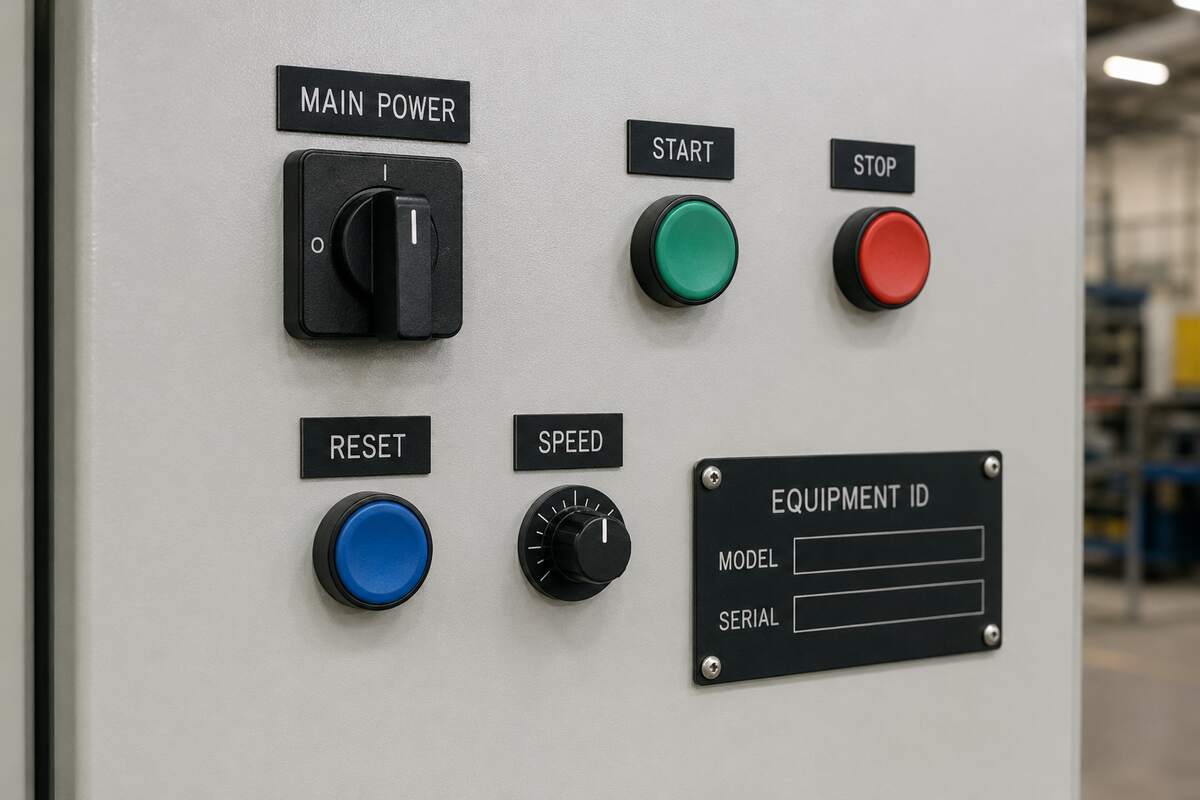
2. Electrical Labels and Control-Panel Legends
Control panels use many small identification components, including ON/OFF labels, selector-switch legends, terminal references, circuit numbers and equipment-function plates. These parts often require consistent dimensions, accurate hole placement and sharp small text.
Black/white, white/black and yellow/black are common high-contrast structures, but the final combination should follow the customer's design and applicable project requirements. Engraving plastic labels are identification components; they should not be presented as a substitute for certified electrical insulation or regulatory safety devices.
Procurement point: When requesting a quotation, provide the drawing format, finished dimensions, hole positions, corner radius, required adhesive, text quantity and whether each label contains the same or variable information.
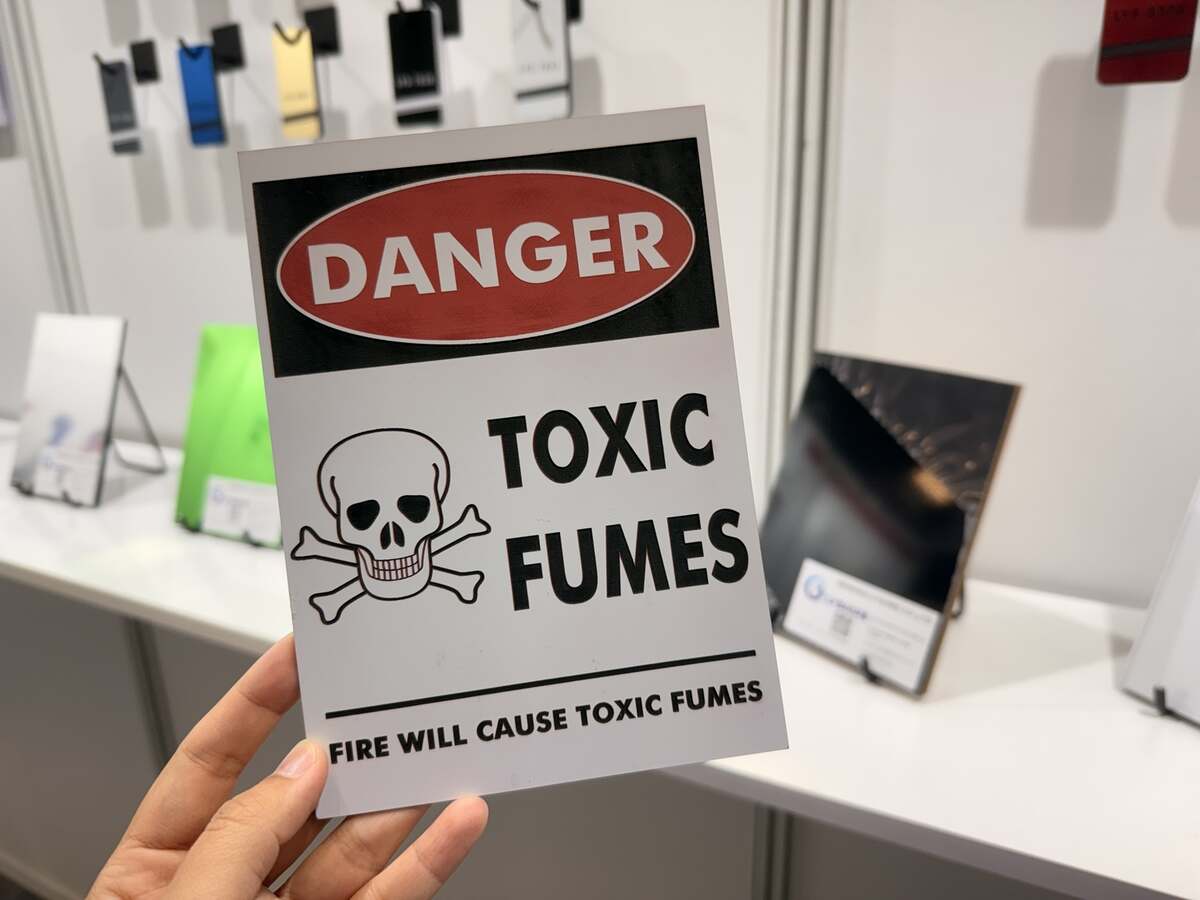
3. Safety Signs, Warning Plates and Facility Identification
Safety and facility applications include warning plates, restricted-area notices, room identification, directional signs, operating reminders and emergency-equipment labels. Engraved contrast remains visible because the information is exposed from the core rather than added only as surface ink.
Color selection should reflect the customer's safety system and local standards. For outdoor or high-exposure projects, buyers should also confirm UV resistance, weather exposure, cleaning chemicals, installation surface and expected service conditions. LYSHIRE can recommend a suitable tested or customized structure after the project environment is defined.
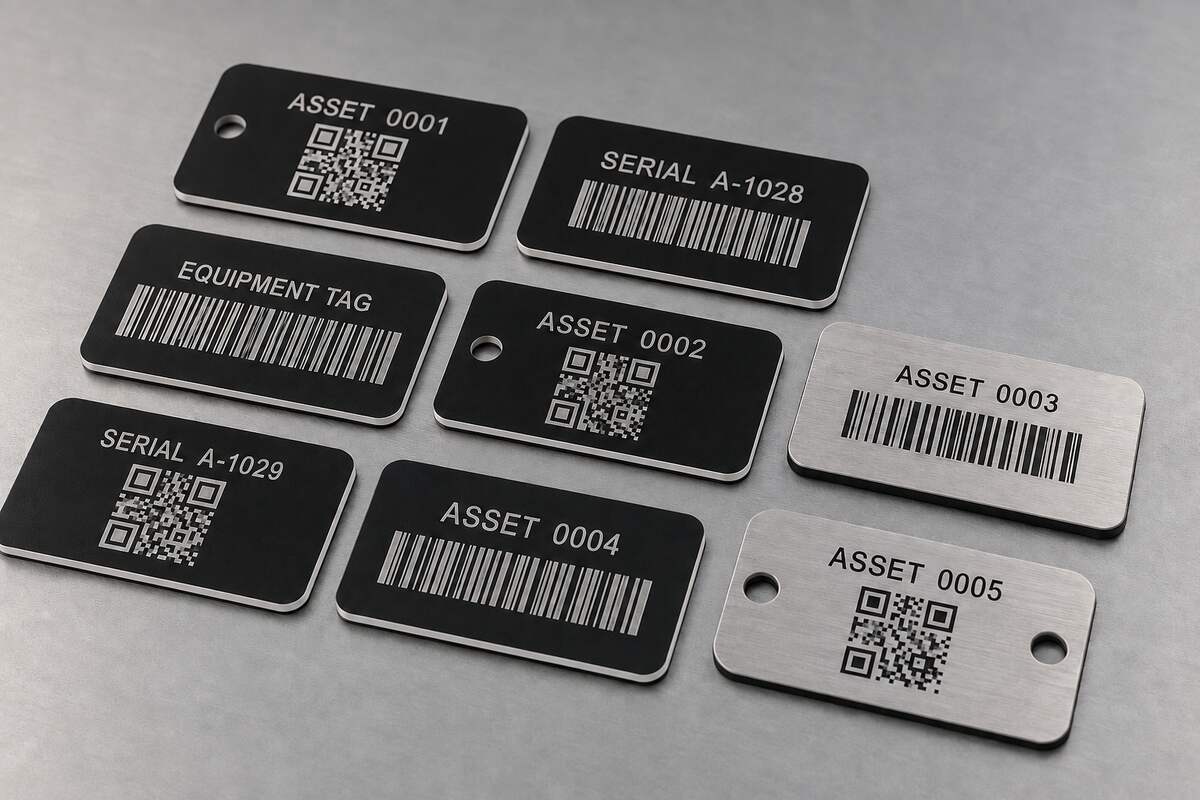
4. Serial Numbers, QR Codes, Barcodes and Asset Tags
Industrial identification increasingly requires variable information. LYSHIRE can batch-produce different names, serial numbers, QR codes and barcodes, provided the customer's data and artwork are suitable for the selected process. This capability is useful for asset management, tool identification, personnel systems, production tracking and maintenance records.
Variable-data projects should be tested for character size, code density, scanning distance, contrast and engraving resolution. A QR code that looks clear to the eye may still require verification with the customer's scanner or mobile workflow before mass production.
5. Name Badges, Small Tags and Custom Finished Signs
Engraving sheets can also be fabricated into personnel name badges, door plates, small hanging tags, award plates and custom signs. Finished-product options may include cut-to-size production, drilling, chamfering, rounded corners, irregular shapes, color filling, UV printing, screen printing or other processes where suitable.
Mounting accessories can be evaluated according to the product, including pin backs, magnetic badge fittings, soft magnetic backing, adhesive, ball chains, ribbons and other components. Small-batch finished signs are accepted, but pricing is based on material, dimensions, processing steps, difficulty, engraving time and quantity rather than a single sheet price.
Application and Material Selection Guide
| Application | Typical information | Main selection points |
|---|---|---|
| Equipment nameplate | Model, voltage, serial number, service data | Process, contrast, thickness, holes and mounting method |
| Control-panel label | Switch function, circuit or terminal reference | Small-text clarity, dimensional accuracy and adhesive |
| Safety or warning sign | Hazard, instruction, prohibition or direction | Legibility, color system, environment and installation |
| Asset or data tag | Name, number, QR code or barcode | Variable-data control, scanning test and batch traceability |
| Name badge or small tag | Personal name, title, department or reference | Edge finish, accessory, quantity and appearance |
| Outdoor identification | Facility, equipment, direction or warning | UV/weather requirements, contrast and mounting system |
What Specifications Should a Buyer Confirm?
- Application: equipment plate, electrical label, warning sign, asset tag, badge or another finished product.
- Processing method: rotary engraving, CNC routing or CO2 laser engraving.
- Material structure: ABS for rotary/CNC or PMMA/acrylic for CO2 laser, together with the required face and core colors.
- Dimensions: full sheet or finished size, thickness, holes, corner radius, chamfer and special shape.
- Surface and installation: matte, gloss, brushed, mirror or reverse-engraving finish, plus adhesive or mechanical mounting.
- Environment: indoor or outdoor use, UV exposure, heat, cleaning chemicals and expected service conditions.
- Artwork and data: CAD, AI or PDF file, fixed or variable content, quantity and destination market.
For material-only projects, buyers can review the LYSHIRE engraving sheet structure system. Customers using CO2 laser equipment can also review the laser engraving sheet range. Finished identification projects can be discussed through the custom application service.
Why Industrial Buyers Use Engraving Plastic
The main value is not simply that the sheet is available in many colors. A suitable engraving laminate combines controlled contrast, repeatable processing, flexible fabrication and efficient production of both fixed and variable information. For B2B purchasing, the finished result depends on matching the material structure to the machine and application.
LYSHIRE can supply full sheets, custom-cut blanks and finished engraved products. Standard and custom colors, two-ply and three-ply structures, double-sided engraving, adhesive options and dedicated customer color records can be reviewed according to the project. Physical sample approval is recommended before bulk production, especially for custom colors, outdoor use or detailed variable data.
Frequently Asked Questions
What are engraving plastic sheets mainly used for?
They are mainly used for equipment nameplates, electrical labels, control-panel legends, safety signs, asset tags, serial-number plates, QR-code labels, wayfinding signs, name badges and other industrial identification products.
Are engraved plastic labels better than printed labels?
The two methods serve different requirements. Engraving removes the face layer to expose a contrasting core, so the information is formed within the material structure. Printing may be appropriate for full-color graphics. The correct choice depends on the application, environment, detail and budget.
Should ABS or acrylic engraving sheet be used?
ABS-based engraving sheets are normally selected for rotary and CNC processing, while PMMA/acrylic-based sheets are normally selected for CO2 laser engraving. The customer's equipment should be confirmed before ordering.
Can LYSHIRE produce different names, numbers or QR codes in one batch?
Yes. LYSHIRE can batch engrave variable names, serial numbers, QR codes and barcodes after the artwork, data format, code size and scanning requirements have been reviewed.
Can engraving plastic signs be used outdoors?
Suitable structures can be selected for outdoor projects, but the exact UV, weather, temperature, chemical and installation requirements must be confirmed. Not every color and finish should be assumed to have the same outdoor performance.
What information is needed for a finished-sign quotation?
Provide the application, processing method, material and color, thickness, finished dimensions, quantity, artwork, variable-data requirements, holes or special cutting, mounting method, service environment and delivery country.
Plan Your Industrial Identification Project with LYSHIRE
Send LYSHIRE your application, artwork, material preference, dimensions, processing method and quantity. Our team can recommend the appropriate engraving sheet structure, prepare samples and quote full sheets, custom-cut blanks or finished identification products.
Contact LYSHIRE for Samples and a Quotation