
Which Plastic Sheets Are Suitable for CO2 Laser Engraving?
CO2 Laser Material Selection
Which Plastic Sheets Are Suitable for CO2 Laser Engraving?
A plastic may react to a laser beam without being suitable for safe, repeatable production. Professional buyers should select a purpose-made engraving laminate according to its base material, face construction, laser source, cutting requirement and ventilation conditions.
Direct answer: purpose-made PMMA/acrylic engraving sheets are normally the preferred LYSHIRE material for CO2 laser engraving and cutting. LYSHIRE's standard ABS-based sheets are intended for CNC or rotary engraving and should not be treated as the default CO2 laser material. PVC, halogen-containing and unidentified plastics should not be processed until their composition and laser compatibility have been confirmed.
The Key Distinction
Laser-Responsive Is Not the Same as Production-Suitable
Material Composition
The polymer, additives, flame-retardant package and surface layer determine whether laser processing is predictable and whether fumes can be managed safely.
Process Quality
A suitable engraving laminate should reveal a clean contrast color, maintain readable fine details and avoid excessive melting, residue or unstable edges.
Machine Compatibility
CO2, fiber and diode lasers interact differently with polymers. The machine type and wavelength must match the material supplied for the job.
Practical Material Guide
How Common Plastic Sheet Types Should Be Routed
| Material | CO2 Laser Guidance | Recommended Use |
|---|---|---|
| Purpose-made PMMA / acrylic engraving laminate | Recommended when supplied and tested for CO2 laser processing | High-contrast labels, signs, identification plates, nameplates and cut-to-shape components |
| LYSHIRE standard ABS engraving sheet | Not the default CO2 laser material | CNC or rotary engraving, routing, drilling and mechanical cutting |
| PVC or halogen-containing plastic | Do not laser process | Select a verified laser-compatible alternative; laser processing may create hazardous or corrosive emissions |
| Unknown, recycled or mixed plastic | Do not process before verification | Obtain the manufacturer declaration or safety data, then perform a controlled material test if approved |
| Special flame-retardant plastic | Composition review required | Confirm additives and machine compatibility before any laser trial |
LYSHIRE Manufacturing Experience
Why the Laser Version Uses a PMMA/Acrylic Base
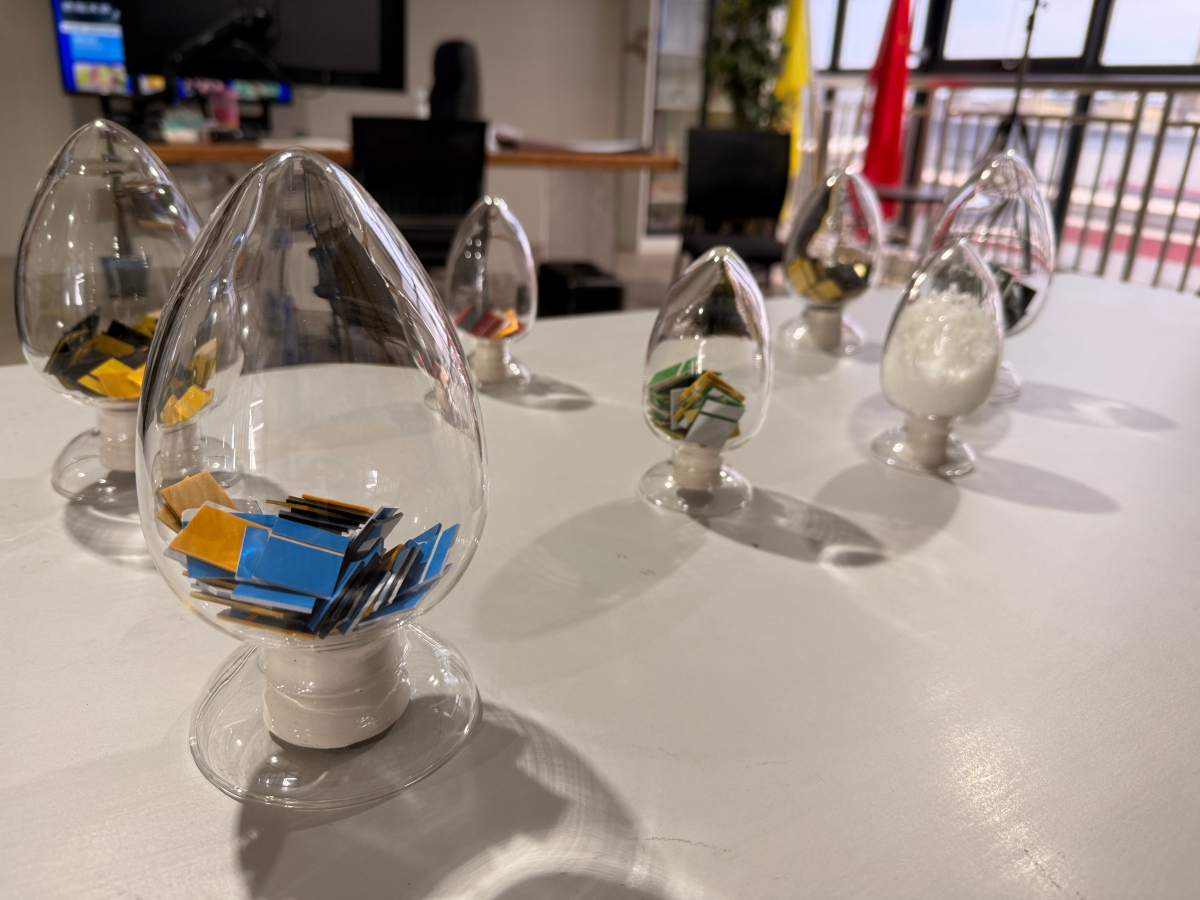
LYSHIRE routes CO2 laser orders to a purpose-made acrylic-base structure. A controlled thin colored face is bonded over one continuous PMMA/acrylic base. During shallow engraving, the beam removes the face and reveals the contrasting core. During vector cutting, the compatible base supports clean, efficient non-contact processing.
The standard ABS version is a different order configuration for CNC and rotary production. Keeping these two routes separate helps fabricators obtain more predictable engraving quality and protects the intended performance of each sheet.
View LYSHIRE laser engraving sheets or review the engraving sheet structure system.
Buyer Selection Checklist
What to Confirm Before Ordering Laser Engraving Plastic
- Laser source: CO2 laser, fiber laser, diode laser or mechanical engraving equipment.
- Operation: surface engraving only, vector cutting, or both.
- Color structure: face color, revealed core color and required engraving contrast.
- Thickness and size: standard sheet, cut-to-size blank or finished component.
- Finish: matte, gloss, brushed, mirror or other approved surface.
- Application conditions: indoor or outdoor use, chemical exposure, adhesive backing and required service life.
- Proof before volume production: confirm a physical sample using the buyer's machine, artwork and target result.
Alternative Processing Route
When ABS Is the Better Choice
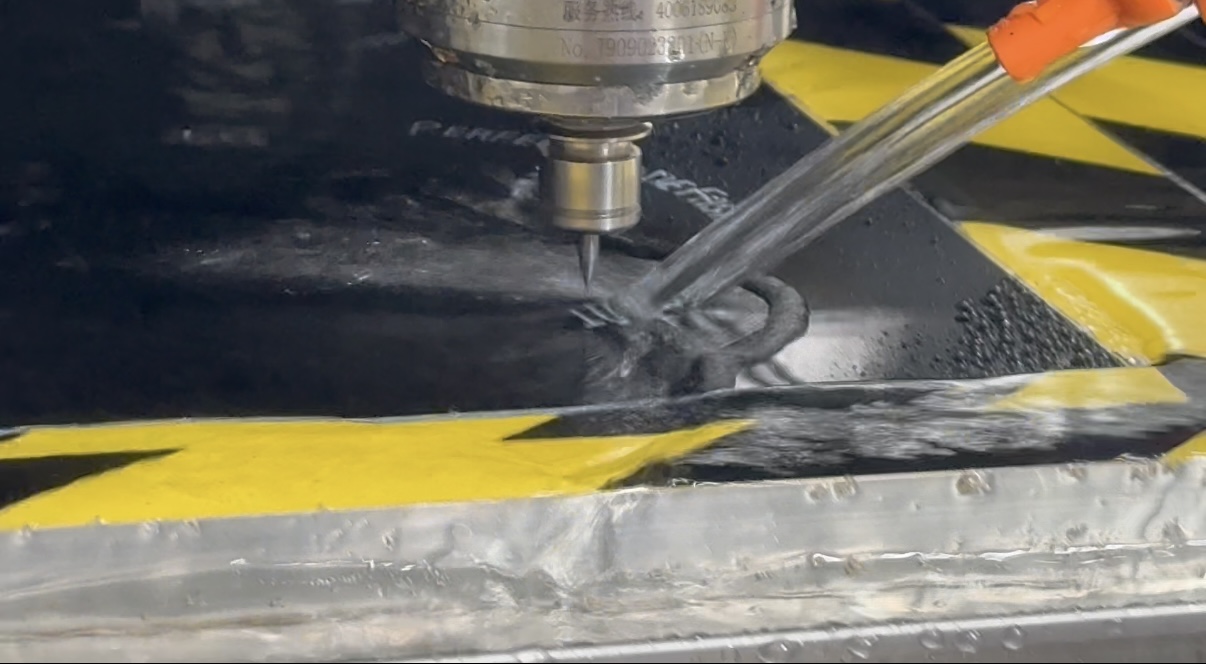
ABS engraving sheet remains an effective option when the customer's production uses CNC or rotary engraving. Mechanical tools remove the thin face layer and expose the contrasting base without relying on laser heat.
- Suitable for rotary engraving, CNC routing and drilling.
- Useful for industrial labels, equipment plates and mechanically processed signs.
- Tool geometry, spindle speed, feed rate and engraving depth should be tested for the selected thickness.
- Laser and CNC versions should be ordered as separate material configurations.
Settings and Quality
There Is No Universal Laser Parameter
Power and speed depend on laser wattage, optics, focus, sheet thickness, face color, artwork and the required depth. A practical starting method is to use a small test area, begin with lower power and higher speed, then adjust gradually until the face is removed cleanly without excessive heat.
- Use correct focus and effective extraction.
- For cutting, Air Assist is normally used to support edge quality and process control.
- For fine surface engraving, LYSHIRE commonly tests with Air Assist off, subject to the machine manufacturer's instructions and the customer's extraction setup.
- Record the confirmed settings for repeat orders and production batches.
Important Material-Safety Rule
Never identify laser compatibility by color, appearance or a simple burn test alone. Confirm the exact material and additives with the supplier. PVC and other halogen-containing materials are excluded from laser processing because the resulting gases or dust can endanger operators and damage equipment. Unknown materials should remain off the laser until documented and approved.
Troubleshooting
What Common Results Usually Indicate
| Melted or sticky edge | The base material may be unsuitable, or heat input may be too high for the selected speed and thickness. |
| Smoke marks on the face | Review extraction, focus, protective film condition and engraving parameters; test before production. |
| Weak color contrast | The face may not be fully removed, the selected face/core combination may be unsuitable, or the depth is inconsistent. |
| Fine details close up | Reduce heat input, verify focus and use artwork appropriate for the available line width. |
| Inconsistent results between sheets | Confirm that the sheets use the same product structure, thickness and production batch, then recheck settings. |
Frequently Asked Questions
CO2 Laser Engraving Plastic FAQ
What plastic sheet is best for CO2 laser engraving?
A purpose-made PMMA/acrylic engraving laminate is normally the preferred choice. It is engineered to reveal a contrasting core cleanly and can support both engraving and cutting when the specific product is approved for CO2 laser use.
Can LYSHIRE ABS engraving sheet be used with a CO2 laser?
LYSHIRE's standard ABS-based sheet is designed primarily for CNC or rotary engraving. For CO2 laser work, select the separate acrylic-base laser engraving configuration instead of treating ABS as the default laser material.
Can PVC be laser engraved?
No. PVC and other halogen-containing plastics should not be laser processed because hazardous or corrosive emissions may be produced.
Can the same settings be used for every engraving sheet?
No. Settings vary with laser power, optics, focus, thickness, face color, core material and required depth. Always run and record a controlled sample test.
What information should I send when requesting a sample?
Provide your laser type and wattage, required sheet size and thickness, face/core color, engraving and cutting requirements, finish, adhesive option, application and destination country.
Sample and Material Review
Confirm the Right Engraving Sheet Before Production
Send LYSHIRE your machine type, wattage, application, color structure, thickness, sheet size and expected engraving result. Our team will recommend the correct laser or rotary material route and arrange sample verification for qualified B2B projects.
Contact LYSHIRETechnical safety references: official laser-material compatibility guidance from Epilog Laser and official unsuitable-material guidance from Trotec Laser. Final processing must follow the laser machine manufacturer's operating and extraction instructions.